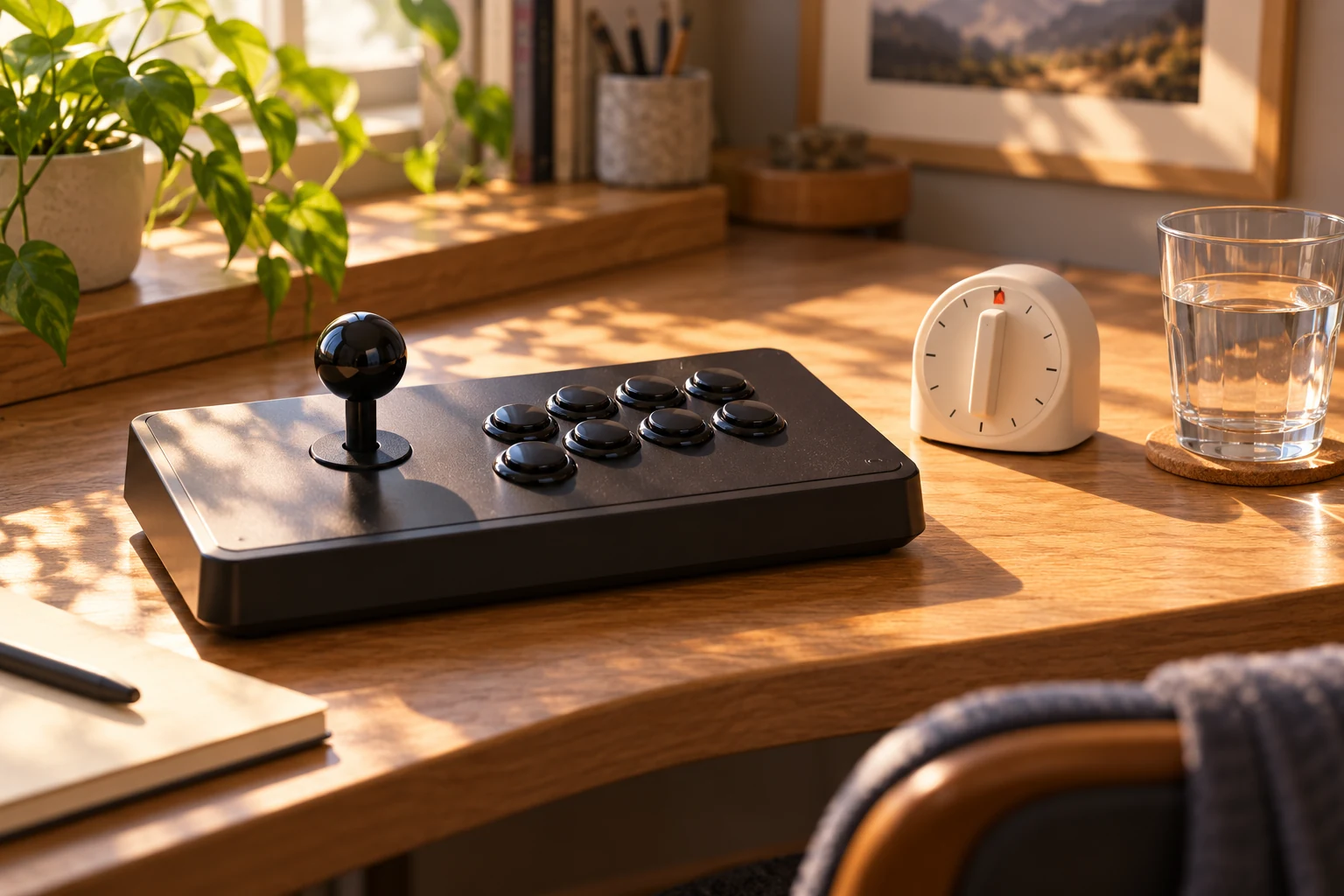
A short practice session works better when you name the part you want to improve before pressing start. Choose a specific section or action: reaching the second stage with fewer losses, recognizing an enemy pattern, or completing a jump consistently. "Get better" is too broad to guide the next attempt.
Leave a little time between retries to record what happened. If you restart immediately every time, you can repeat the same mistake without noticing when or why it began. The pause only needs to be long enough to choose one adjustment.
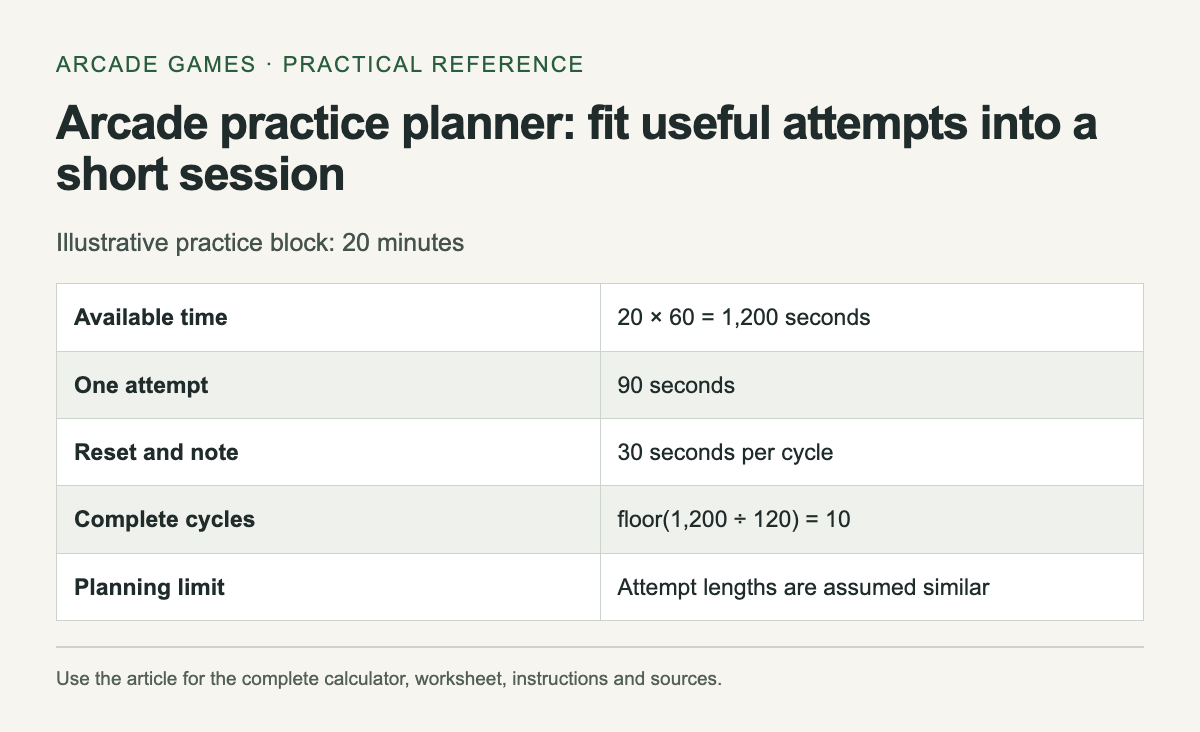
Estimate the number of attempts
Plan a short practice block
Estimated attempts = floor(available minutes × 60 ÷ (attempt seconds + reset-and-note seconds)). This estimate assumes similar attempt lengths.
The estimate is a planning aid. Real runs can end early, menus can take longer and interruptions happen. If the result is zero, choose a shorter segment or a longer session instead of pretending you can fit a complete attempt into the available time.
Define a result you can observe
Use a target with a visible outcome. "Reach the checkpoint without losing a life" is clearer than "play smoothly." If the game offers a practice or stage-select mode, check its rules before assuming the segment matches a full run.
Keep the difficulty and control setup stable while testing a particular tactic. A changed input layout can be a useful experiment, but it belongs in its own block so you can tell what affected the result.
Separate learning from record attempts
During a learning block, you may deliberately try a slower route or inspect a pattern. That can reduce the score while giving you information. Do not judge every experimental run by whether it beats your record.
During a record block, use the setup and route you chose, then record the score with its rules. Mixing the two kinds of attempt can make a useful practice session look unsuccessful simply because the highest score did not move.
Review a small number of runs
After a few attempts, look for a repeated problem. If each failure happens in a different place, the target may be too broad or the game may introduce changing conditions. Narrow the task to one section where you can compare decisions.
Write the earliest mistake that affected the rest of the run. Losing the final life may be the visible ending, but the useful adjustment could involve a resource spent much earlier. Keep that link tentative until another attempt supports it.
Change one decision
Pick one adjustment for the next block: wait for a different opening, take a safer route or use a resource earlier. Leave other choices alone when possible. A single change makes the result easier to understand, even when it does not immediately improve your score.
If frustration or fatigue makes the task unpleasant, stop or switch to ordinary play. The calculator does not set a quota you owe the session. A record of five attentive attempts can be more useful than a longer list made while you no longer care what happens.
End with a return note
Write the tactic you want to repeat and the one question still unresolved. Save it beside your score log. Next time, you can begin with the chosen task instead of spending the opening minutes remembering what you intended to practise.
The form does not store your plan. Copy the estimate into your own notes if it helps, then adjust the attempt duration after observing a real session. Keep the estimate labelled as an estimate; it cannot predict the length of a run you have not played.
The same focused practice idea can apply to a timed casual game such as the archive’s Cake Mania archive entry.


No comments:
Post a Comment