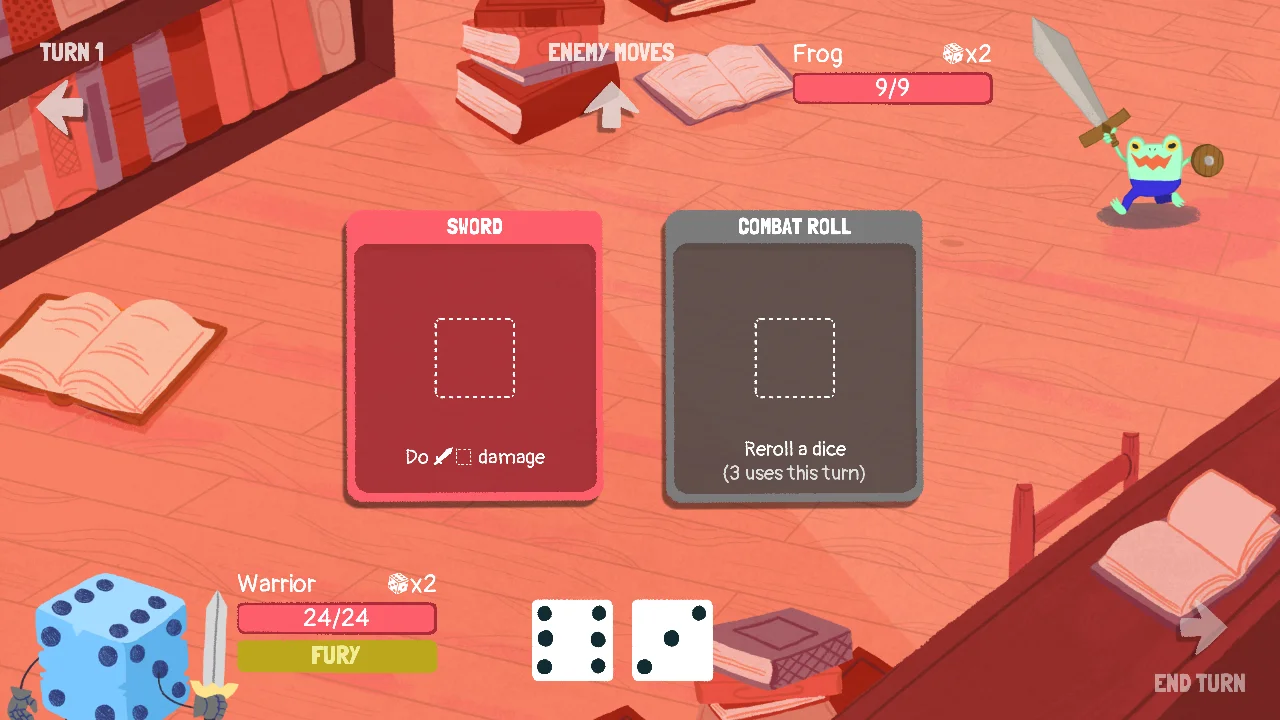
Before placing your first die in Dicey Dungeons, read every usable piece of equipment. A die that fits an unrestricted attack may also be the only die that satisfies a more demanding slot. Plan the turn before spending the roll.
The official press kit describes a game built around equipment, changing dice rolls and characters with distinct rules. This beginner guide focuses on reading those rules and allocating a turn. Exact equipment values and episode conditions should always come from your current screen.
Reserve the awkward die first
I recommend identifying the most restrictive useful action before using a die on something flexible. Read whether a slot asks for a particular value, a limit or another condition. Then compare the dice you actually rolled.
For an invented example, imagine one useful item accepts only a three, while another accepts any die. If you rolled a three and a five, spending the three on the flexible item may remove an option you wanted. This is a simple allocation exercise, not a claim about a named item’s current balance.
| Equipment question | Why it matters | Decision to make |
|---|---|---|
| Which dice are accepted? | A restrictive slot can compete for a unique die | Reserve its input if the effect is valuable |
| What does the effect actually do? | Damage, defence and dice manipulation solve different problems | Choose the result needed this turn |
| Can it be used again? | One use and repeated use create different plans | Read the card before allocating extra dice |
| Does another item depend on it? | Order can change your available options | Resolve the enabling action first |
| Will the enemy survive? | Defence can matter when another turn is likely | Compare immediate damage with the expected response |
Read a shop as a change to your loadout
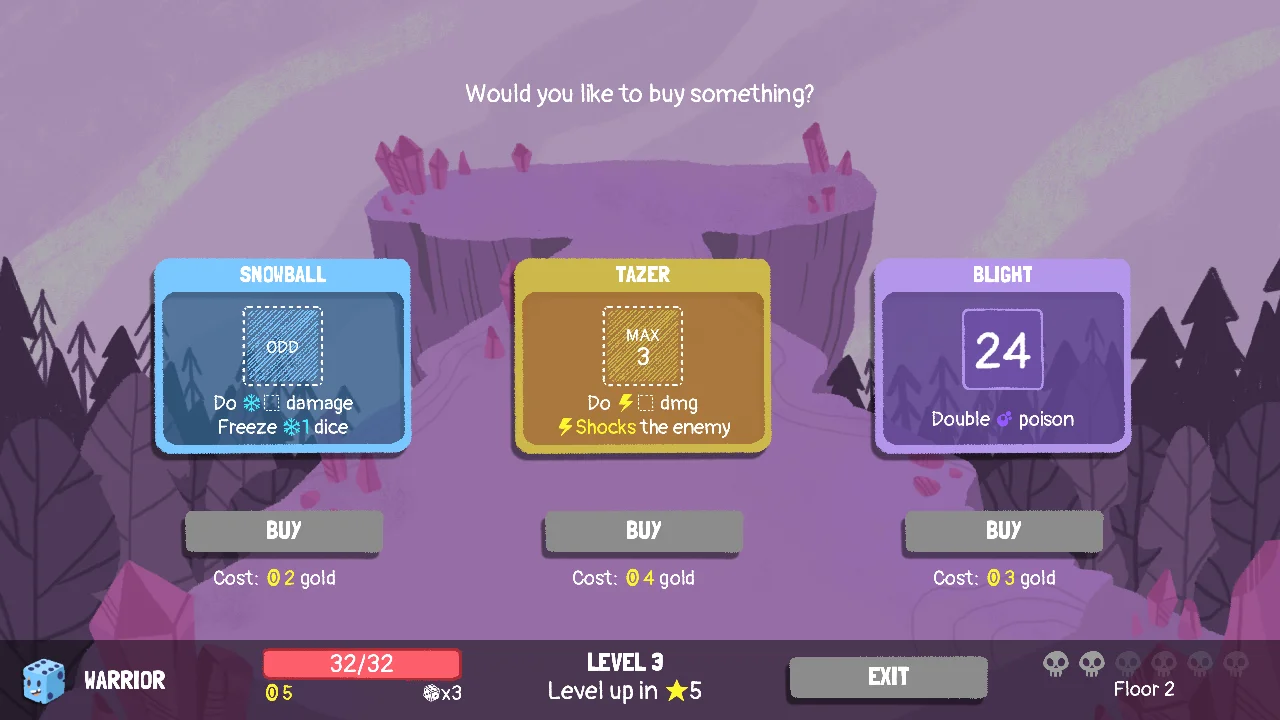
Before buying, name the problem the item solves. Does your current equipment leave particular rolls unusable? Do two items need the same input? Would the purchase replace a piece you rely on, or does it support a plan you already understand?
A powerful-looking effect can be awkward if your other equipment consumes the dice it needs. Conversely, a modest effect can be useful when it gives purpose to rolls you regularly waste. Judge the combination rather than reading each card in isolation.
Use a short turn-planning checklist
- Read the enemy information and your current equipment conditions.
- Find the useful actions with the fewest acceptable inputs.
- Check whether a dice-changing effect should happen before another action.
- Allocate the remaining dice to flexible effects.
- Review any unused dice and the likely enemy response before ending the turn.
You will not always have a perfect sequence. The purpose is to make a deliberate trade-off, so you can understand afterward whether the result came from the roll or from how you used it.
Keep character rules separate
The official introduction describes very different systems for characters such as the Robot and Witch. A trick you learned with one character may depend on a rule another character does not share. Read the current character and episode information when starting a new run.
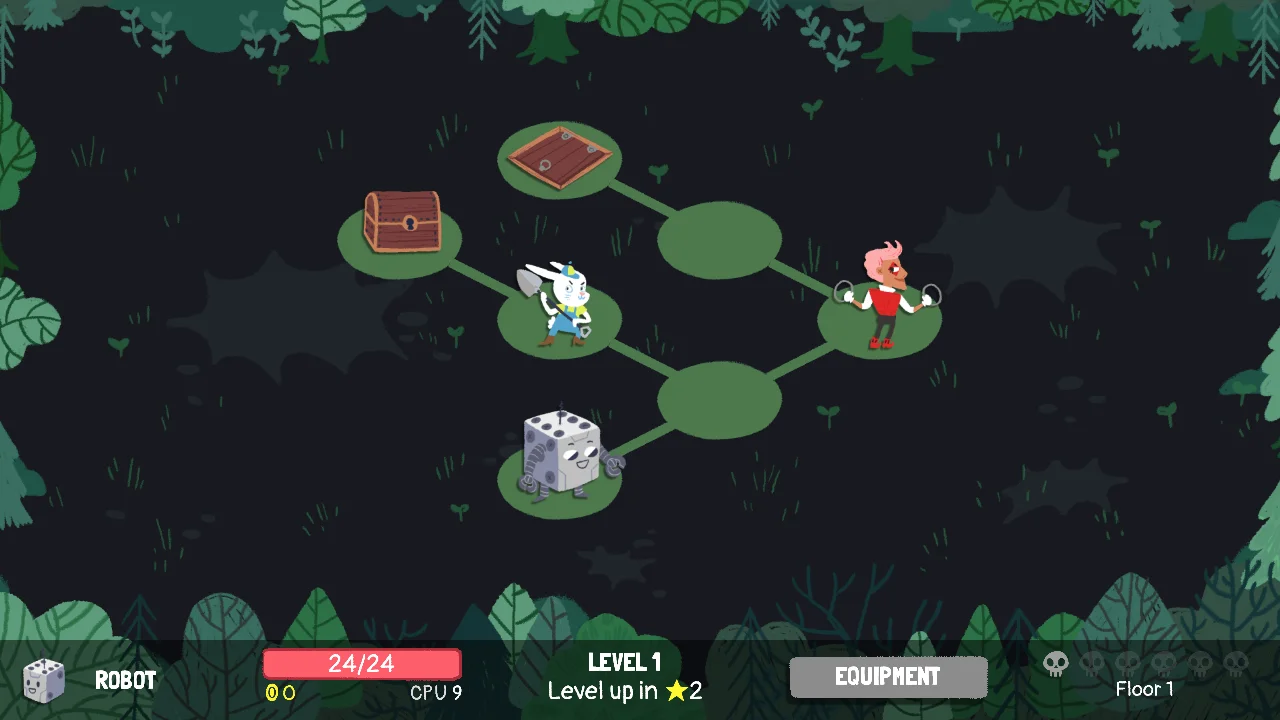
I would learn one character’s first available setup well enough to explain a few turns before treating advice for every character as interchangeable. If experimentation is what you enjoy, switch freely, but give each new ruleset a fresh reading.
Review one decision after a fight
Ask whether you spent a scarce die too early, overlooked a condition or bought equipment without a clear role. Choose one observation to use in the next encounter. “The roll was bad” may be true, but it does not reveal whether another allocation was available.
For a practice review, write the dice values and two possible orders before committing. Compare what each order leaves unused. You can do this mentally once the equipment is familiar; there is no need to turn every fight into a spreadsheet.
Our Brotato shop guide offers another way to judge purchases by their role in a build. Dicey Dungeons screenshots are supplied through the developer’s press kit. Use the official game website for current platform and purchase links.
Official promotional screenshot. Copyright remains with the developer.


No comments:
Post a Comment